House Lights Down: A Memory Trail Through Camberley's Lost Cinemas and Dance Floors
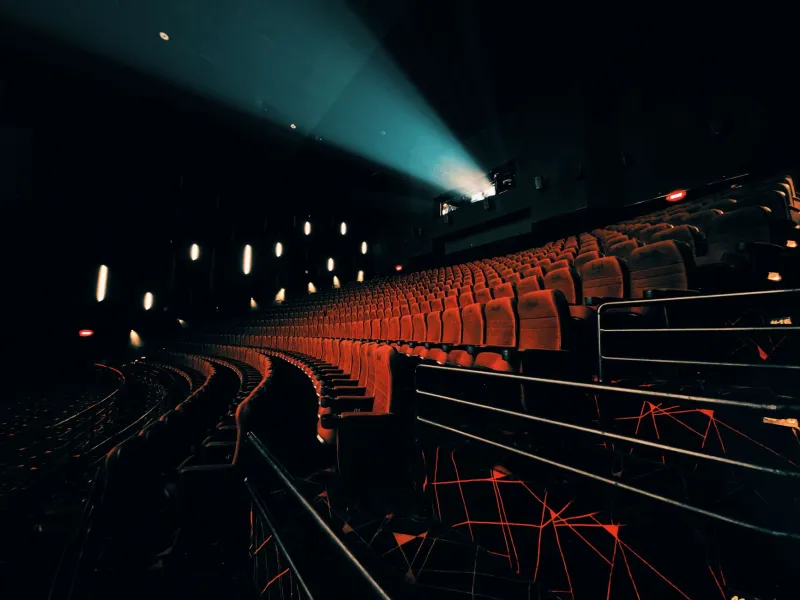
Every town has a building that everybody of a certain age remembers and nobody can describe accurately. In Camberley, it's the cinema. Ask two people on the High Street and you'll get three versions - wrong name, wrong side of the road, wrong decade - but exactly the same feeling. A queue curling round the corner. A torch beam sweeping the aisle. A tray of ice cream arriving in the dark at precisely the right moment.
The buildings have mostly gone. The evenings they made haven't.
A growing town with an appetite
Camberley is a newish name on a rather older place. Until 1877 the town was Cambridge Town, and the Post Office eventually got so tired of sorting its post from the actual Cambridge that the name was changed. What grew up afterwards was a town with a built-in churn of people - the Royal Military College down the road, the Staff College on the hill, families posted in and out every couple of years - and a population like that develops a healthy appetite for something to do on a Saturday night.
Early entertainment came from halls rather than picture houses. Church rooms, assembly rooms, the sort of space where a travelling concert party could rig up a screen or a stage for one night and be gone by Monday. Silent films turned up in the 1910s and 1920s in exactly that improvised spirit: a projector, a sheet, and a pianist who knew to speed up when the chase started. Proper picture houses followed in the thirties, and by the end of the war a weekly trip to the flicks had shifted from treat to routine.
Ninepence, a cartoon and the National Anthem
If you want to understand what those Saturday mornings felt like, forget the plot. The films were rarely the point.
The ritual began with the club - the Saturday morning picture club that nearly every chain ran, with a badge, a song, a birthday shout-out and a serial that always stopped halfway through somebody falling off a cliff. There was a cartoon, a Western short, a newsreel nobody watched, and a manager in a suit who came out to ask for hush.
The auditorium itself was a sensory experience our reclining seats can't replicate: smoke catching the beam of the projector, a floor that crunched slightly underfoot, a screen that rippled whenever somebody opened the fire door. Somebody's mum had queued in the rain to get them in. Somewhere in the dark a bottle of Tizer was being passed along a row.
And then, at the end, everybody stood for the National Anthem. Try getting a room of eleven-year-olds to do that now.
The other half of the night
Cinemas were only part of it. Camberley's real social engine was the dance floor - the hall above the pub, the function room booked out on a Friday, the tea dance that filled a weekday afternoon with quicksteps and gossip.
Military towns have always run on this. Bands came with the garrison, dance bands played the same reliable set of numbers, and the Staff College calendar meant there was usually a ball coming up that demanded at least a bit of practice. Through the fifties and sixties the same rooms absorbed skiffle, rock and roll and then soul, with a live music scene that flickered in and out of function rooms as landlords changed their minds.
This mattered more than it sounds. The dance floor was the town's internet: where you found out who was courting whom, where the decent jobs were, who had a car, and who could be trusted to walk you home. Very few of those rooms survive as rooms. Quite a lot of what made them work could be rebuilt anywhere.
What stands there now
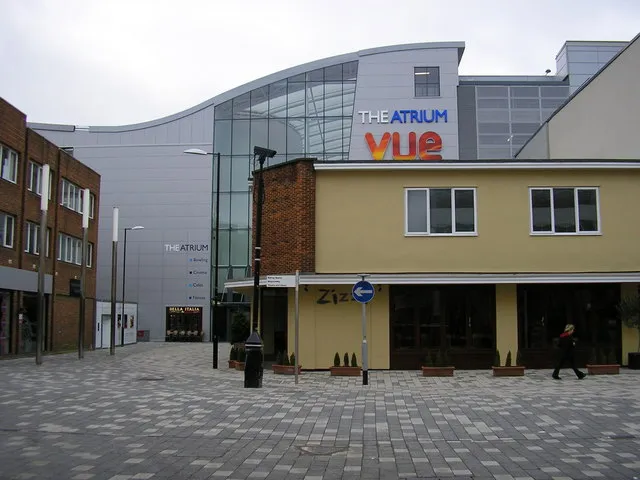
Take a wander and you can plot the losses. Sites that once held a stage or a screen now hold charity shops, coffee chains, nail bars, and flats stacked above retail units. Banks have gone, the last of the old function rooms have been converted, and the nearest multiplex is a drive rather than a stroll.
It's tempting to frame that as a tragedy. It's more accurate to say the town didn't lose the buildings so much as lose the habit. Somewhere along the way, a night out started to mean a car journey, a booking fee and a parking app, and a fair number of people quietly stopped bothering.
The people who made it work
The names that survive in local memory aren't usually the ones on the front of the building. They're the projectionist who spliced a broken reel and got the film back on before anyone complained. The usherette at the interval who knew every regular by name. The woman on the door at the dance who took your coat and remembered it. The bandleader who played the same four songs for twenty years because they worked.
None of those were glamorous jobs. All of them turned a building into somewhere people went without thinking twice.
What the next lot can pinch from them
The old venues weren't magic. They were local, cheap, warm and on a schedule. They happened on the same night every week, which meant you didn't have to actively want to go - you simply went, because that's what Thursday was.
So when Camberley argues about what should fill its empty units, the question worth asking isn't only what looks good in a planning document. It's what gets a person who knows nobody to walk through the door on their own. A cheap ticket. A regular slot. Somebody at the entrance who says hello.
We'd love to hear your version. If your Saturday mornings involved a badge, a cartoon and a manager asking for quiet - or if you still own the shoes you wore to a dance at the Staff College - do get in touch. This town's history of a good night out is mostly written in people's heads, and those are archive copies that don't survive without a bit of help.