Cold Nights, Full Shelves: The Camberley Volunteers Turning Surplus Into Supper
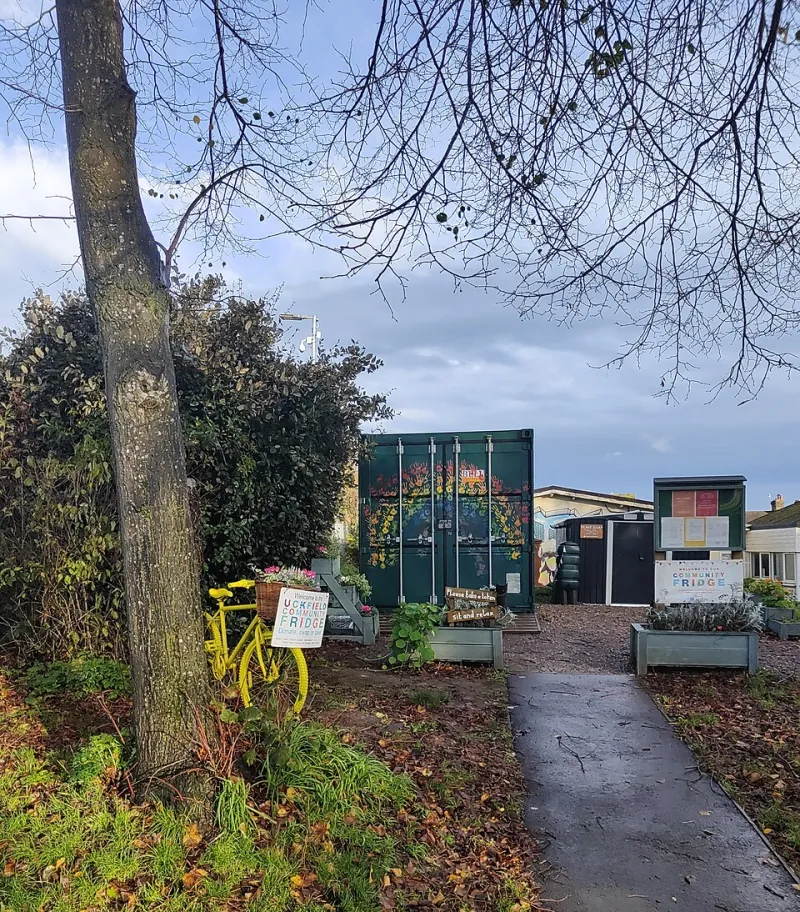
Photo: PAUL FARMER , CC BY-SA 2.0, via Wikimedia Commons
There’s a particular kind of November morning in Camberley. The pavements along the High Street have that damp shine, the market traders are in coats, and the first proper frost is never far away. Inside a church hall not far from the town centre, though, it’s already warm — and busy. Crates are being stacked, bread is being sorted, and someone Is making a careful note of which apples need eating first.
This is the less glamorous side of community life, and arguably one of the most important. Across Camberley and the wider Surrey Heath area, volunteers are gearing up for winter by turning surplus food into something far more useful: supper. Not with fanfare, and certainly not with a lecture about waste. Just a steady, practical routine of collecting, checking, chilling and sharing.
The fridge that isn’t really about fridges
Call it a community fridge if you like — the phrase has stuck. But the people who run Camberley’s surplus-food network will tell you the fridge is only part of the story. There are shelves, crates, a chest freezer or two, and a small army of people who know the difference between a best-before date and a use-by date without having to think about it.
The idea is simple enough. Local shops, cafés, bakeries and supermarkets end up with food they can’t sell — a misshapen loaf, a punnet of tomatoes nearing its date, a tray of sandwiches made for an event that didn’t quite happen. Instead of that food going in the bin, it comes here. Volunteers check it, sort it, and put it out for anyone who can use it.
No referral. No form. No awkward conversation at a desk. You walk in, you take what you need, and you leave. That lack of fuss is deliberate. Volunteers say it’s what makes the project work: people who might never describe themselves as “in need” will happily pop in for a loaf and a chat.
The winter shift
As December approaches, the rhythm changes. Demand tends to rise — not dramatically, but steadily — as heating bills land and Christmas spending starts to loom. At the same time, donations can get a little more complicated. Everyone thinks of tinned goods in December, which is lovely, but what the volunteers really want is variety.
“Fresh stuff disappears first,” says one volunteer, who has been helping on collection runs for the past three winters. “People can get tins anywhere. If we get a box of peppers or a tray of yoghurts, it’s gone in an hour. Bread is always popular. And at this time of year, anything that can go straight into a soup or a stew is gold.”
That’s not to say tins aren’t welcome. They are — especially pulses, tomatoes, rice, pasta and long-life milk. But the team is careful to explain that a community fridge is not a food bank, and it is not a place to dump a cupboard clear-out from 2019. Everything donated needs to be in date, sealed where relevant, and genuinely useful.
The winter push is also about time, not just stuff. Collections from local shops often happen early in the morning or late in the evening, and the volunteers who do them are the sort of people who know the back doors of half the town’s cafés. More hands mean more collections, and more collections mean fuller shelves.
What actually ends up on the table
On a typical Tuesday, the shelves might hold: loaves from a bakery in Yorktown, bags of salad from a supermarket near the station, a few boxes of cereal, some slightly bruised bananas, and a tray of ready-made pasta pots that need eating that day. There’s usually a small stack of recipe cards nearby — not glossy campaign material, just handwritten suggestions for turning odds and ends into something hot.
Volunteers are keen to stress that this isn’t charity in the old-fashioned sense. It’s waste reduction with a neighbourhood benefit. The same food would otherwise be thrown away by businesses that have no easy way to redistribute it. The fridge simply closes the loop.
And it works both ways. Plenty of people who donate are also collectors. A nearby café owner drops off sandwiches twice a week and picks up a bag of apples for staff meals. A retired couple in Heatherside bring spare veg from their allotment and take home a loaf. The lines between giver and receiver are deliberately blurry.
If you want to collect
The first rule is: don’t overthink it. You don’t need to prove anything or explain yourself. Bring a bag, check the opening times, and take what you’ll actually use. Volunteers ask that people don’t clear the shelves — leave something for the next person — and that they check dates before eating, as they would with anything from a shop.
If you’re nervous about walking in, try a quieter mid-morning slot. The volunteers are not there to interrogate you. Most will offer you a cup of tea before they offer you a form. And if you only need one thing, that’s fine. The whole point is to make good food normal, not to make a performance out of need.
If you want to donate
Check first. Most community fridges can’t take raw meat, alcohol, or anything past its use-by date. Fresh fruit and veg, bread, dairy, sealed tins and packets, and unopened chilled goods are usually welcome. If you’re a business with surplus, get in touch before turning up with a vanload — the team can tell you what they can store and when.
And if you’re clearing out your own kitchen, be honest with yourself. Would you eat it? If the answer is no, it probably isn’t a donation. If the answer is yes but you just won’t get to it, that’s exactly the kind of thing the fridge is for.
The small cogs that keep it turning
What strikes you most, after an hour or so helping out, is how ordinary it all is. There’s no grand speech. Someone is wiping down a shelf. Someone else is ringing a shop to ask if they’ve got any bread going spare. A volunteer is explaining to a visitor that the yoghurts on the left need eating first. The kettle goes on again.
Camberley is a town that often gets described in terms of its retail parks and its roundabouts. But this is the other Camberley — the one that turns up on a cold Saturday morning to sort carrots. It’s not a headline-grabbing story. It’s better than that. It’s a full fridge, a warm hall, and a neighbour who knows your name.
As winter settles in, the volunteers will keep going. They’d love more company. Whether you’ve got an hour to spare, a box of apples to drop off, or simply a willingness to tell someone else that the fridge exists, there’s a place for you. The full-fridge club is always open to new members.