Sign Language: Reading Camberley's Streets Like a Local History Book
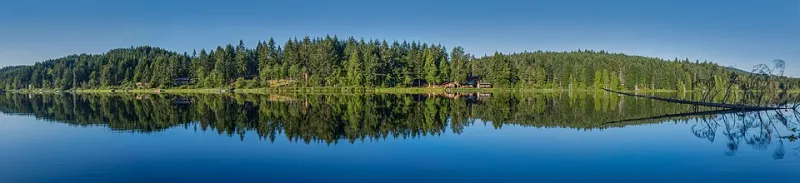
Photo: Michal Klajban, CC BY-SA 4.0, via Wikimedia Commons
There's a particular kind of joy in a street sign. It doesn't shout, it doesn't ask for anything, and it will never end up on a postcard. But every one of them is a tiny, weatherproofed history lesson — and Camberley has a cracking collection. You just have to look up.
So next time you're waiting at the lights on the A30, or cutting through Yorktown on the school run, try this: treat the signs as chapter headings. Because the story of this town is written in enamel and aluminium, and it's a lot more entertaining than it looks.
The Long, Straight Tease of London Road
Start with the obvious one. London Road runs through Camberley like a ruler drawn across a map, and there's a reason for that. The A30 is the old London to Exeter road, and its dead-straight stretch through town is a legacy of the turnpike age. When toll roads were being improved in the 18th century, the priority was speed and smoothness, not scenic detours. Hence the gloriously unbothered line of London Road — a road so focused on getting somewhere that it forgot to wiggle.
The name itself is a small act of ambition. A road called London Road is a road with a destination, even if you're only popping to the shops. And if you've ever wondered why it's so wide in places, blame the coaches. They needed room to pass, and the town grew around that generous ribbon of tarmac.
Yorktown: The Duke, the Camp and the Cake
Now head north and you meet Yorktown. It is not, despite what a visiting friend once asked me, anything to do with New York. The name is a nod to Prince Frederick, Duke of York — the 'Grand Old Duke of York' of nursery-rhyme fame, who was Commander-in-Chief of the British Army in the early 19th century.
With the Royal Military College at Sandhurst on the doorstep, the area grew as a natural little settlement for people connected to the army. The story goes that the growing hamlet took its name from the duke's title, and it stuck. These days Yorktown Road is a proper local high street in miniature — a parade of shops, a chippy or two, and the kind of place where the queue at the counter knows your order. Not bad for a bloke on a horse.
Cambridge Town, Renamed
Here's the one that surprises people. Camberley wasn't always Camberley. Until the 1870s it was known as Cambridge Town — a name that must have caused absolute chaos for the Royal Mail. Letters meant for the university city were turning up in Surrey, and presumably vice versa. Something had to give.
The town became Camberley, a name thought to come from a local field or clearing, and the postmen of Britain breathed a collective sigh of relief. You can still see the old name in bits of local history, and it's a reminder that places, like people, can change their name and keep their character.
Farms That Became Pavements
Plenty of Camberley's streets are named after things that were here long before the houses. Portesbery Road sounds wonderfully Norman, and it likely is — a name that has survived centuries of maps and boundary changes. Watchetts Drive remembers an old manor name. Old Dean carries a name that belonged to the common and the farm long before the estate arrived. Frimley Road simply points to the older neighbour next door, a signpost in tarmac form.
Then there's Heatherside, which does exactly what it says on the tin: heather-covered heathland, now a neighbourhood. Tekels Avenue is a lovely head-scratcher — the name comes from the old Tekels Park estate, and local historians still enjoy a good argument about where that came from. That's the joy of this stuff. Not every sign has a neat answer, and the mystery is half the fun.
The Names That Did a Job
Some street names are less romantic but just as useful. Station Road tells you exactly where the railway arrived. Park Street and The Avenue are straightforward. High Street is a reminder that this was the commercial heart long before the bypass and the retail parks. These are the workhorse names — the ones that didn't need a duke or a manor to justify themselves.
Your Turn: A Ten-Minute Sign Safari
You don't need a guidebook or a walking boot. Start at the A30, look up at the London Road sign, and work your way north. Turn onto Yorktown Road, clock the name, then loop back through Frimley Road and Portesbery Road. Ten minutes, one flat white optional, and you've walked through two centuries of local history.
Street signs are free entertainment. They're the town's autobiography, written in metal and enamel, and they're hiding in plain sight. Next time you pass one, give it a nod. It's been waiting ages for someone to ask.