Under the Pavement, Behind the Sign: Testing Nine Camberley Legends
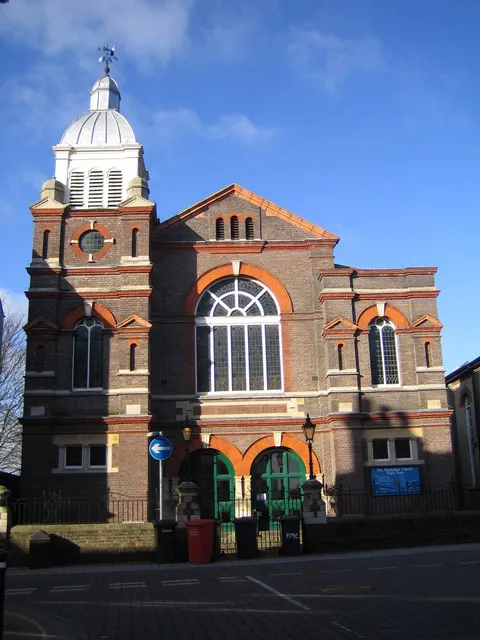
Photo: Nigel Cox, CC BY-SA 2.0, via Wikimedia Commons
Every town has a filing cabinet of stories it loves to pull out. Some are printed in books, some are passed along at the bus stop, and rather a lot arrive with the phrase: “Well, my nan always said…” Here at TruCamberley, we like a good yarn as much as anyone — but we also like a librarian with a catalogue and a local historian with a raised eyebrow.
So we asked around. We chatted to staff at Camberley Library, dipped into notes from Surrey History Centre, and listened to long-standing residents who have watched the town change shape. Then we gave nine favourite legends a verdict: True, Tru-ish or Tall Tale. This is not a courtroom. It is a friendly sort of myth-busting, with tea.
The rules of the game
True means the story holds up. Tru-ish means there is a real seed of something in there, even if the details have been stretched like a good jumper. Tall Tale means we love the telling, but the evidence has gone missing. And if you have a legend we have missed, the comments and inbox are open.
1. There are tunnels under the High Street
The story goes that a network of passages runs beneath Camberley’s main shopping street, linking old pubs, cellars and possibly a secret something-or-other. It is the sort of tale that gets more elaborate with every retelling.
Verdict: Tall Tale. There are certainly cellars and service spaces under older buildings — as you would expect in a town that grew up quickly — but local history volunteers could not point us to a continuous tunnel network. What people remember as a tunnel is often a Victorian cellar, a coal chute or a very dramatic delivery bay. Sorry to the ghost tour industry.
2. The name Camberley was invented for the railway
A popular one: the town did not really exist until the railway arrived and someone needed a name for the station. It has the ring of a tidy fact.
Verdict: Tru-ish. The name has older roots than the railway, likely tied to field names and the surrounding landscape, but the station and the town that grew around it certainly helped fix “Camberley” on the map. Think of it less as a Victorian branding meeting and more as a name that got its big break.
3. A well-known shop was originally somewhere else entirely
Every town has a shop that “used to be over there” — usually with a firm point in the wrong direction. The tale often involves a business moving across the road, swapping units, or being remembered in three places at once.
Verdict: Tru-ish. Shops move. Leasehold units change hands. Signs get reused. And human memory is a wobbly map at the best of times. There is usually a grain of truth in these stories, but pinning down the exact unit is harder than it sounds. If your family ran the shop in question, we would love to hear from you.
4. A Roman road runs under the A30
This one has real staying power. The A30 is a long, straight-ish road, and straight roads invite Roman theories.
Verdict: Tru-ish. The area has older routeways, and the A30 follows historic alignments in places, but that does not mean there is a legionary under every lay-by. The sensible version is that old roads often echo even older paths. The fun version involves centurions. We are keeping both.
5. Blackwater was named after a black lake
A moody one: somewhere nearby was a dark lake, hence Blackwater. It sounds almost gothic.
Verdict: Tall Tale. The name is much more likely to do with dark-coloured water in the river or stream rather than a mysterious lake. It is a lovely image, but the evidence points to something plainer — and honestly, a river called Blackwater is already quite atmospheric enough.
6. There is a secret passage from a pub to the church
This is a classic. The pub, the church, a hidden passage, perhaps a lantern-bearing vicar. It turns up in towns all over the country.
Verdict: Tall Tale. Old pubs have cellars. Old churches have crypts and boiler rooms. The two have not been found joined by a secret corridor in Camberley. We checked the likely candidates, and the closest we got was a very impressive cellar door and a lot of local enthusiasm.
7. Camberley is missing from the Domesday Book
This one sounds almost insulting, but it is often repeated as fact.
Verdict: True. Camberley as a town did not exist in the Domesday Book. The area was covered by surrounding settlements and parishes, so you will not find a neat entry for “Camberley” in 1086. It is not an insult — just a reminder that towns are made over time, not delivered fully formed.
8. The old cinema has a ghost
Camberley has lost more than one place of flickering light over the years, and with old cinemas come stories: a figure in the aisle, a light that will not switch off, a phantom usher.
Verdict: Tru-ish. We could not verify any spectral staff members, but old buildings collect stories the way carpets collect popcorn. The cinema history is real; the ghost is a matter of faith. We are happy to leave a light on for it.
9. “Camberley was built for soldiers first and shoppers second”
This is the sort of line you hear from somebody’s nan, usually followed by a nod. The town’s growth is often linked to the military presence nearby, and the High Street came later.
Verdict: Tru-ish. The area’s development is tangled up with the military college and nearby barracks, and that shaped the town enormously. But Camberley also grew as a place for ordinary shopping, housing and getting on with life. Soldiers first, shoppers second? Not quite. More like both, jostling for space — which is still a decent description of a Saturday.
Got a legend we have missed?
Every town has one more story. Perhaps it is the house with the strange name, the lane that used to lead somewhere else, or the shop that definitely sold something unusual in the 1970s. Send your Camberley legends to TruCamberley — the half-remembered ones, the family ones, the ones that start with “I was told…” We will keep testing them, gently, with tea and a library card at the ready.