Top Deck to the Terminus: One Ordinary Camberley Bus, End to End
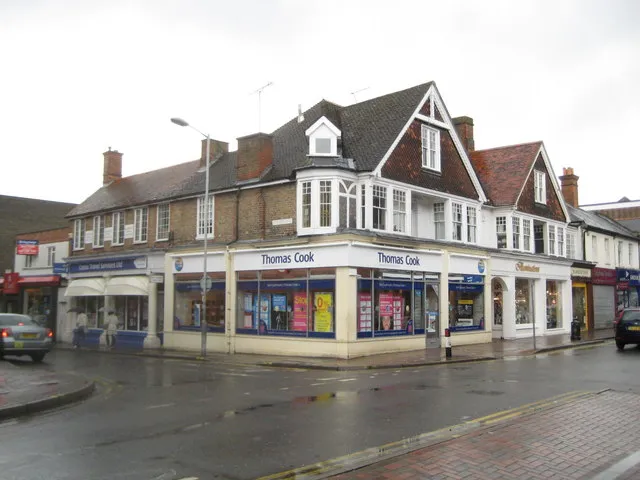
Photo: Photograph: Radomianin, Public domain, via Wikimedia Commons
It is 9.42 on a damp Tuesday morning and I am standing at Pembroke Broadway with a return ticket and no plan beyond the end of the line.
The bus I have picked is one of Camberley's quiet workhorses: a route that threads out through the residential edges of town rather than sweeping along the A30, the sort of service nobody photographs and everybody notices only when it is late. Not the quickest way to anywhere. Which is precisely the point.
My rules for the morning were simple. Board at the busiest stop. Stay on until the driver announces the terminus. Then ride back. No sneaky taxi, no hopping off for a flat white, no cheating by checking my phone every ninety seconds.
The case for riding to the end
We are oddly fussy about buses. We treat them as a means, never as a place. But a bus is a moving front room, and the top deck is the best seat in any town: a free, gently rocking viewing platform with no admission charge and no obligation to make conversation.
I also wanted to test a theory. Everyone claims to know Camberley. Very few of us have actually looked at it from four feet up, moving slowly, for an hour and a half.
Stop one: the many small rituals of Pembroke Broadway
The busiest stops have their own choreography. There is the runner, always one, doing that half-jog, half-shrug that says 'I know I am late but I refuse to look it'. There is the pushchair ballet at the doors. There is the woman who has clearly done this every day for a decade and stands in exactly the right spot, three feet from anyone else, before the bus has even turned the corner.
The driver, who has seen all of this before, waits. That is the first thing I notice: the patience. Not the weary kind, either. Just an unhurried professionalism, a hand raised to a regular, the doors held for a man still folding a buggy.
We pull away, and the town begins to unspool.
The window-table landmarks
Riding a bus is like reading a town in the margins. From the top deck you get the backs of things: the yard behind the shop, the washing line above the dry cleaner's, the tidy little garden nobody on the pavement will ever see.
You also get the landmarks that make a place feel known. The church spire that pops up between rooftops. The green where the dog walkers gather whatever the weather. The corner where traffic always slows and nobody quite knows why.
I started a list in my notebook: a bright blue front door, three hanging baskets outside a hairdresser's, a noticeboard with a jumble sale flyer already curling at the corner. Small stuff. The sort of small stuff that turns out to be the whole town.
Overheard, unedited
The top deck is also an accidental radio station. Fragments drift back from the seats in front:
'I told him, if you're going to be like that, get the bus yourself.'
'...so she's doing it in the garden now, which is fine, except the neighbours.'
'I'm not saying it's a bad job. I'm saying it's a lot of standing.'
No names, no context, all of it completely absorbing. A bus is the last truly public room we have. People rehearse arguments, break news and ring their mums to say they will be twenty minutes late, all within earshot, all entirely unbothered.
The green stretch, and the change in the air
About halfway along, the houses thin out and the view opens into trees. Deep gutters, clipped hedges, a golf course glimpsed through a gap in the fence. The passengers change too: the commuters thin out, a dog in a coat turns up, someone boards with a canvas bag and a very specific mission.
This is where I stopped thinking about the bus as transport and started thinking about it as a tour. Not a heritage one, not a guided one. Just the town showing you its edges without asking for anything in return.
The terminus, and the quiet moment after
Terminus is a lovely, slightly melancholy word, and the reality is exactly that. The bus sighs, the doors hiss, and the handful of us file off into a car park with one bench and a wheelie bin. A pigeon inspects something. The driver has the vehicular equivalent of putting the kettle on: a phone call, a stretch, a slow walk round the outside of the bus.
Nobody lingers. Terminuses are not destinations; they are full stops. But for two minutes the whole town feels porous and unhurried, and I find myself oddly fond of a roundabout I could not place on a map if you paid me.
Then the engine turns over, the seats fill again, and we go back the other way.
The return leg, which is secretly better
Everyone says the outbound trip is the adventure. I disagree. The return is where you get the view, the town reassembling itself ahead of you rather than disappearing behind.
It is also where you notice the practical stuff. The stops that are actually sheltered. The one crossing where the bus always waits. The corner shop that stays open late, the church hall advertising a warm room and a cup of tea, the noticeboard with the coffee morning that has been running since before anyone reading this was born. This is the town's infrastructure of care, and it is legible only at walking-plus speed.
Notes for anyone tempted to copy me
- Upstairs, left going out if you want gardens, right coming back if you want rooftops. Or ignore me entirely and pick the sunny side.
- Sit over the back wheels only if you enjoy being shaken like a tin of biscuits.
- Buy a return, obviously, and check the timetable twice. Services are thinner than they were a decade ago and the last bus back is earlier than you think.
- Say thank you to the driver. You will notice most people do. That is not a small thing; it is a whole social contract in two syllables.
- Give up your seat without being asked. Also entirely normal here.
The verdict
I got home ninety minutes later with a notebook full of nonsense and a slightly better idea of where I live. No scenery was harmed. Nothing was spent beyond a bus fare and a coffee I did not buy.
Camberley hides its best bits behind fences, hedges and habit. A bus is the cheapest way I know of slipping behind all three. Take the window seat. Go too far on purpose.